
Past Members of The Francis Bacon Society
 Obituaries are a great resource for current day researchers. A look at past members’ colourful and moving tributes sheds a very interesting light on the calibre and breadth of learning of the early pioneering Baconians. It is also of some very considerable social and historical interest.
Baconians were all extraordinarily learned in their different fields and contained amongst their ranks; surgeons, lawyers, a naval commander, clergy, politicians, librarians and writers. There were often disagreements and disputes which was perhaps to be expected from articulate, driven people with a devotion to Francis Bacon and his many and varied facets. As with all areas of life some members were quiet and contemplative, some combative and garrulous some urbane and charming but regardless of method, all demonstrated a complete dedication to the Baconian cause and with this an underlying respect and friendship for each other. It is with touching tributes that they document the passing of their and our fellow members.
"Praising what is lost
Makes the remembrance dear."
All’s Well That Ends Well 5:3:19-20
Members are arranged alphabetically by surname and the full tribute can be seen in the corresponding Baconiana referenced at the bottom of the tribute.
BAYLEY, HAROLD (c.1869-1965)
‘The Council announce with the greatest regret the death in his 97th year of Mr. Harold Bayley, for many years a most versatile member of the Francis Bacon Society. Mr. Bayley was at one time a leading authority on paper and paper-making, but a wider range of interest was characteristically revealed in a Preface to Paper Terminology, published by his firm, which abounded in references to Ancient History. More substantial works by him were Archaic England, The Lost Language of Symbolism (two volumes), and A New Light on the Renaissance. Like many Baconians, therefore, Harold Bayley was an independent thinker, and his contributions to our controversy on watermarks, symbolism, and allied subjects were, and are, of great value to us.
We have lost a stalwart from another generation. Let us respect him and honour his achievements.’
Baconiana, No. 165, Oct 1965, Editorial
REVEREND BEGLEY, WALTER (1845-1905)
 ‘A new and important contribution to the Bacon-Shakespeare controversy is now in the press, and will be shortly issued by Messrs. Gay and Bird. The general title is “Bacon’s Nova Resuscitatio.” It is in three parts : (1) The Resuscitatio; (2) Exit Shakspere; (3) Enter Bacon. The author is that learned and accomplished scholar and bibliophile, Rev. Walter Begley, editor and translator of Milton’s “Nova Solyma,” and author of “Is it Shakespeare?” This, alas! is the last literary production of the author, for he is fatally ill, and will, probably, before these words reach the reader, have already joined the great majority. His illness is most tragic and pathetic. Early this year he was attacked by ophthalmia, with persistent nasal haemorrhage. This was evidently occasioned by malignant disease of the orbits and nasal passages: and the disease has pursued its fatal course, producing first blindness, and then gradually undermining the vital forces by exhausting and almost uncontrollable haemorrhage. Alas that Milton’s latest representative should inherit Milton’s calamity!
Another work on Cabalistic and Latin Anagrams—a work of curious research—is also in the press : a sequel to two other books recently published by the same author, “Biblia Cabalistica ” and “Biblia Anagrammatica.”
The duty of superintending the printing of the Baconian book has been undertaken by Mr. R. M. Theobald. At present we may be content with this simple announcement. Mr. Begley’s new facts and arguments are of a very startling kind, and will bring the controversy into relation with many other books and persons of the Elizabethan age. R. M. T.’ (Robert Masters Theobald)
Baconiana, No. 12, October, 1905, pp. 254-55
THOMAS BOKENHAM (1910-2003)
 ‘Thomas Bokenham, also known as “Bokie” has been an avid researcher on the Shakespeare Authorship issue for over forty years. As a result of his research into the 1624 book “Cryptomenytices et Cryptographia” he was able to discover cyphers in the text of the Shakespeare Sonnets, the 1623 Folio, and Bacon and Shakespeare related monuments. This has convinced him that Francis Bacon was the author of Shakespeare, was born of a royal birth and had affiliation with the Rosicrucian Fraternity. He has contributed his time with The Francis Bacon Society as Chairman and Treasurer while penning numerous articles for Baconiana and is the author of two short books “Bacon, Shakespeare and the Rosicrucians" and "A Brief History of the Bacon-Shakespeare Controversy.”
In November,1994, Bokie appeared in a BBC TV documentary which was watched by millions called "The Battle of Wills" where he presented evidence of a cypher on the Shakespeare Monument in Poets Corner inside Westminster Abbey.’
‘The son of a doctor, “Bokey” as he was widely known, was the only boy of three children, and attended Epsom College as a boarder. He married Ruby (nee Yockney) in April, 1936, and they have two daughters, Antonia and Christine.
Bokey’s working life began on the London Stock Exchange, but he later went to work for the Bank of England, where he remained until his retirement, after 40 years of service. He spent the Second World War at the Bank, as despite his best efforts, and 5 medical boards, he was passed as unfit for active service.
A man of wide interests, he particularly enjoyed music and the theatre, his wife Ruby is a professional musician. It was the chance purchase of a book at a bookstall that initiated his life-long interest in Francis Bacon and the Shakespeare authorship question. He made the acquaintance of the Brameld family: the twins Elizabeth and Mary and their redoubtable mother, Hope, and over the years attended many meetings of the Francis Bacon Society in their gracious home in Nevern Square.
He also met Noel Fermor, a Solicitor in the City of London, who was on the Council of the FBS and in due course Bokey was invited to become a member of Council himself. In time he became Chairman, a role which he graced for many years, doing a great deal of research and also handling administrative matters and guiding the Society through smooth times and the occasional rough patch too. His research often appeared in the booklets or articles in Baconiana which was published yearly under his aegis. He discovered a code in the Shakespeare Sonnets and in the inscription on the Shakespeare memorial in Westminster Abbey.
He kept up an extensive correspondence with his fellow Baconians and enjoyed a lively relationship with Ewen McDuff, best known for his books The Dancing Horse Will Tell You and The 67th Inquisition.
It might be said that over the years he became somewhat obsessed with the Bacon/Shakespeare enigma, but in the nicest possible way.
He regularly visited the Bank of England Sports Club in Roehampton, and on one occasion during his later years had to be rescued by the life guard and taken to hospital – during which experience he remained his usual imperturbable self!
After Bokey retired he attended an informal get-together at the Bank and met his old boss, “Eddie” George, a former Governor of the Bank of England, and reminded him “you were my student”. This was taken in good part, as Bokey was one of the few people at the meeting whom he recognised.
Apart from his considerable personal qualities Bokey will be gratefully remembered by the Society as a dedicated researcher and Chairman, who worked tirelessly on behalf of the Society for many years.
Peter Welsford with the assistance of Ruby Bokenham
BURGOYNE, FRANK J. (1858-18th October 1913)
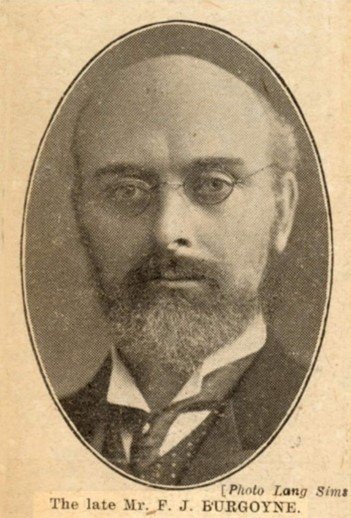 Francis James Burgoyne was born in Blaenavon, Wales and was the Chief Librarian of Lambeth from 1887 until his death in 1913. An article in the South London Press stated that 'Under his care the Lambeth Libraries became the best equipped institutions of the kind in the Metropolis'.
Burgoyne will be remembered for editing two works relating to Francis Bacon; History of Queen Elizabeth, Amy Robsart and the Earl of Leicester being a reprint of “Leycesters Commonwealth” 1641 and Northumberland Manuscripts: Collotype Facsimile & Type Transcript of an Elizabethan Manuscript Preserved at Alnwick Castle, Northumberland,
A most important work in the history of Baconian, literary and historical research edited by Frank J., Burgoyne who massively expanded upon the cursory and functional notice from Bacon biographer James Spedding years before, and in 1904 presented Bacon's manuscript 'for the first time photographically facsimiled.' The work was dedicated to the Duke of Northumberland and to Baconian and M.P. Sir Edwin Durning-Lawrence 'without whose aid and encouragement the volume could not have been published.'
The outer cover of Bacon's collection of manuscripts contains references and links to the narrative Shakespeare poem The Rape of Lucrece and another three of his Shakespeare plays Love’s Labour’s Lost, Romeo and Juliet & The Merchant of Venice. This is the only manuscript where the names Bacon and Shakespeare appear together in a contemporary document. Various forms of his name Bacon and Francis Bacon and his pseudonym Shakespeare and William Shakespeare have been scribbled across its outer cover on around twenty occasions
'Mr. Burgoyne combined a wide professional knowledge with ripe scholarship and a great love of books, and, in addition to several authoritative works on public library administration, published some important contributions to Baconian Literature.’ Obituary from The Pall Mall Gazette October 20th 1913
‘Mr. Frank J. Burgoyne succumbed to an illness of long standing on the 18th of October last at the age of 56. In the previous year he underwent the critical operation of trepanning. This was for the time successful, and he returned to his duties, but the old trouble re-asserted itself with fatal results.
Mr. Burgoyne commenced training as a librarian at the age of 17 under Mr. Mullins at the Birmingham Reference Library. Subsequently he was sub-librarian at Newcastle-on-Tyne. From there he was appointed librarian at Darlington, and in 1887 he received the position of chief librarian at Lambeth, which position he held to the time of his death. He was a vice-president of the Library Association and a regular contributor to its “Transactions.” He was also the author of “Library Construction, Architecture, & joint author of "Books for Village Libraries”; editor of “History of Queen Elizabeth, Amy Robsart, and the Earl of Leicester.” He was the transcriber and editor of a very fine facsimile and type transcript of the famous Northumberland Manuscript.
Mr. Burgoyne possessed a thorough knowledge of books, especially those of the Elizabethan period, and his services were enlisted by Sir Edwin Durning-Lawrence in the collection of his library. in which he probably had no superior. His advice was sought and freely given to his brother librarians throughout the country on important questions.
Mr. Burgoyne was a convinced Baconian and was a member of the Council of the Society.’
Baconiana, no. 47, July 1914 pp. 184-185
CARR-GOMM, FRANCIS EARDLEY (1924 – 2009)
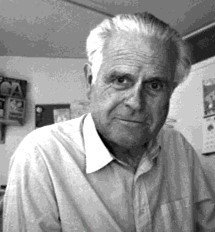 'Francis Carr was a remarkable man with a wonderful open-mind to the end of his life. He loved to question the accepted throughout his life. Recently he had decided on an improvement to Descartes’ aphorism ‘Cogito Ergo Sum’. He felt ‘Disputio ergo sum’ summed up human nature more effectively, and he meant this, not in a derogatory way. Instead he saw our ability to disagree with each other as an attribute of intelligence, and enjoyed nothing more than a good debate. To hold to one’s views, to maintain one’s own unique stance, even if it meant standing in opposition to prevailing opinion, was one of his strongest attributes.
He was born in Warwickshire in 1924. At the age of 18, as soon as he left school, he joined the army where he joined the 60th Rifles and became a lieutenant. At the age of twenty, he was sent to the front line in Italy in the autumn of 1944, after a training that was so basic it didn’t include even the most rudimentary first aid, and he soon found himself having to give orders to men who knew more about fighting than he did. Although he was only in action for 8 months, his experiences there marked him for life.
The war over he tried to pick up the thread of his education. He enrolled at London University’s School of Slavonic Studies to study Russian. This was a time when many left-wing intellectuals were finding themselves attracted to communism, which Francis found infuriating. He knew about the atrocities of Stalin, and later wrote a book about the dictator’s horrendous precursor, Ivan the Terrible. Unable to cope with the prevailing sympathies of his fellow students and professors, and having failed to get a job with the Intelligence services, he took on a job as private secretary to Lord Willoughby de Eresby, the MP for Rutland. In 1948 he met and married Jane, the love of his life.
Francis tried his hand in the world of publishing, and worked on the staff of a new magazine, The Ambassador, and then got a job copy-writing for the official publisher in England to the Holy See. From the world of Catholic publishing he moved on to working as a history teacher for Carlisle & Gregson, cramming students for university.
It was then that Francis decided to start his own magazine, which had a unique slant. It was a history magazine, but unlike its rival History Today, it included articles on the future too, and so was called Past & Future. It ran for seven years, during which time Francis got to know a wide range of scholars, eccentrics and artists. Although Past & Future was a professionally produced magazine, Francis ran it from the dining room table at home, cutting and pasting text together with prodigious quantities of cow-gum: a technique that he continued to use throughout his life, and which members of the Bacon Society experienced in his invaluable Shakespeare Authorship publications. . .
All this while, when he was editing Past & Future or working with the recitals, Francis was also busy with his passion for solving the mystery of the authorship of the Shakespeare plays. He published articles in his magazine about it, founded The Shakespeare Authorship Information Centre, and for over thirty years, right up until he died, edited a digest of press comment about the question, that he entitled The Stratford Tragi-Comedy.
In 1969 he brought a private prosecution against the Shakespeare Trustees on the grounds that there was no evidence of Shakespeare’s Birthplace being genuine. The Trustees never denied the charge but defended themselves with a ‘plea of avoidance’, and the case was dismissed. He favoured the theory that Francis Bacon wrote the plays, and was a member of the Francis Bacon Society, travelling to their meetings right up until earlier this year. He also believed that Bacon wrote Don Quixote, normally attributed to Cervantes, and in 2004 his book Who Wrote Don Quixote? was published, that laid out his theory in detail.
One of Francis’ greatest attributes was his active mind that constantly questioned received wisdom and enjoyed challenging the status quo. When he was 48 his first book was published: European Erotic Art. This was followed nine years later by his biography Ivan the Terrible and then his most successful book: Mozart & Constanze.
In the last six months of his life he wrote a play about Pushkin, who died in a duel defending his honour in St.Petersburg.
Ronald Hutton, who is the Professor of History at Bristol University, and a Commissioner of English Heritage commented that Francis was a ‘remarkable personality’ and ‘a significant player on the English cultural scene of his time, and although his literary causes were unorthodox, I think that posterity will be interested in them.’ Nick Young and Philip Carr-Gomm
Baconiana, No. 4, February 2011
COCKBURN NIGEL BALFOUR (1930-2007)
By all accounts, Nigel Balfour (“N. B.”) Cockburn was a quietly spoken man who rarely discussed his life. We know he came from a Scottish family. His father, Ernest Henry Cockburn, served as a Major in The Royal Fusiliers (City of London Regiment) during the First World War. His mother was Eileen Maud May Cruikshank.
Nigel’s great-great-grandfather, Lord Henry Thomas Cockburn of Bonaly, was a well-respected Scottish lawyer, judge, literary figure, and conservationist for Edinburgh. Lord Henry’s legacy lives on, with several streets, as well as the oldest conservation society in Scotland, The Cockburn Association, having been named after him. Nigel’s uncles, his father’s brothers Robert and John Cockburn, founded the famous wine business, Cockburn’s Port Wine, which Nigel’s father Ernest carried on.
The wine business was not the path for Nigel, however. Instead, he had his eyes set firmly on a career in the law, perhaps with a nod to his famous great-great-grandfather. Nigel was a member of the Inner Temple. His admission and call papers state that “Nigel Balfour Cockburn of the Brambles, Brassey Road, Limpsfield” was admitted to the bar on 22 July 1948 at the age of 18 during his national service, that he was the third son of Ernest Henry Cockburn of Bonaly, Oxted, Surrey, a port wine shipper, deceased, and that he was called to the Bar on 22 June 1955. Thereafter followed a long career as a barrister in London.
We do not know how or when he first became introduced to the life and works of Francis Bacon. It is intriguing to think he may have been related to the Scottish born Sir John A. Cockburn who was President of the Francis Bacon Society from 1919 until his death in 1929. Sir John, who had a distinguished career as a doctor, Freemason, and Premier of South Australia, was also a strong supporter of women’s suffrage.
While a family connection between Nigel and Sir John remains unclear, what is clear is that, after his retirement from the practice of law, Nigel spent over ten years researching and writing his groundbreaking work, The Bacon Shakespeare Question: The Baconian Theory Made Sane. He spent countless hours at the British Library in London. When he published the book in 1998, he was fulfilling a long-held ambition. An established member of the Francis Bacon Society, Nigel sent all his fellow members a free copy of the book and paid for all the publication costs himself. His generosity of spirit continued when he left the copyright of his work to the Francis Bacon Society.
It would appear Nigel never married but devoted his life to two key interests: law, and the study of Francis Bacon. We wish we knew more about this intensely private man. However, we do have his book which is surely the measure of the man. The Society considers it an immense honour and privilege to be able to reprint this, his seminal work, and thus, to enable his legacy to live on by introducing a whole new generation to Francis Bacon and the Shakespeare authorship question.
Prefatory biography from The Francis Bacon Society edition of Nigel B. Cockburn’s The Bacon Shakespeare Question, 2024
DODD, ALFRED (1879-1953)
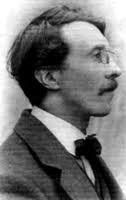 ‘As we were preparing to publish BACONIANA, we learned with a sense of profound shock of the death of Mr. Alfred Dodd, a very well-known Baconian and Mason, and author of Shakespeare’s Secret Sonnet Diary, The Marriage of Elizabeth Tudor: Creator of Freemasonry, Francis Bacon and the Brethren of the Rosicrosse, The Secret Shakespeare, The Immortal Master, and other publications. Mr. Dodd had been ill for some time past, but had remained keenly interested in the Society, which can ill afford the loss of so brilliant an exponent of Bacon’s philosophy and teachings.-whether published under his name or another’s. We intend to return Mr. Dodd’s life work next time, but meanwhile take the opportunity to place on record our tribute to a great Baconian. Baconian.
N. F.’ (Noel Fermor)
Baconiana, No. 145, March 1953, p. 38
‘It is difficult to estimate the services rendered to our cause by the late Alfred Dodd, whose obituary notice has already appeared. He was a Baconian of the most radical views, of what Stratfordians would call the “deepest dye”; and of a genuine ardour which, more than once, brought him into collision with more conservative members. There used to be a joke about the three kinds of Russian the Whites, the Radishes (pretending redness), and the Tomatoes. Dodd in most of our controversial subjects, was an unqualified "tomato," hotly resenting the suggestion that Mrs. Gallup could have been an impostor or a lunatic. Of course, like everyone else, she may have made mistakes, and one remembers an occasion when Dodd himself re-wrote a whole chapter of The Martyrdom of Francis Bacon because the present writer had suggested that he had been unfair to Sir Walter Raleigh.
Dodd’s espousal of our cause brought it to the notice of various spiritualistic movements and widened our appeal to the public. Of his published works perhaps the sonnet diary is the most original and certainly the best seller. If the demand becomes strong it may be re-printed. Another valuable book is Shakespeare Creator of Freemasonry. This was sold out and not re-printed; second-hand copies are now practically unobtainable even if advertised for, showing that those who possess them (probably mostly Masonic Brethren) do not wish to part with them. The writer remembers lending his own copy to his Vicar who was an ex-headmaster and chaplain to the County Lodges. The book was returned with the comment that the Vicar was now convinced of three things, (a) that whoever wrote the Shakespeare Plays was a member of the Craft, (b) that the pen which wrote the Plays had clearly drafted the early English masonic ritual, (c) that this person was quite clearly Francis Bacon This opinion had come from a very critical reader who, in the exercise of his profession, was something of an expert on rhythm and ritual. . .’
Baconiana, No. 146, August 1953, Editorial
DU MAURIER, DAPHNE, (LADY BROWNING), (13th May 1907 - 19th April 1989)
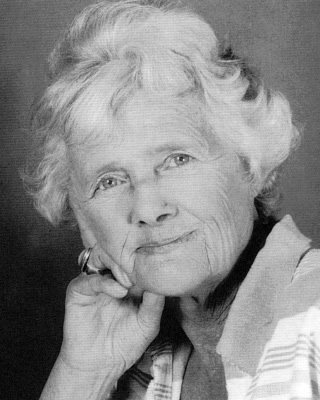 Born in London Du Maurier was the daughter of actor and manager Gerald du Maurier and Muriel Beaumont a stage actress.
Du Maurier went on to become a famous novelist, biographer and playwright. Rebecca, Jamaica Inn, The Birds, Don’t Look Now, were just some of her numerous works with many being adapted for film. In 1969, du Maurier was awarded the Dame Commander of the Most Excellent Order of the British Empire (DBE). She was also a prolific non fiction writer including Golden Lads: Sir Francis Bacon, Anthony Bacon and their Friends (1975), The Winding Stair: Francis Bacon, His Rise and Fall (1976).
Du Maurier’s books on Anthony and Francis Bacon are brilliantly written and well researched containing letters from Anthony Bacon’s collection at the Lambeth Place library. The works are not ‘overtly’ Baconian but offer a fascinating, incisive and often highly amusing account of their lives and times.
She spent much of her life in Cornwall where many of her books are set and she was in many ways a private person dedicated to her writing. What is not very well known is that Daphne du Maurier was a Baconian and Vice President of the Francis Bacon Society. She was presumably introduced to Baconianism through her great uncle Comyns Beaumont who was a Baconian, journalist, writer and staff editor for the Daily Mail.
DURNING-LAWRENCE, SIR EDWIN (2 February 1837-21 April 1914)
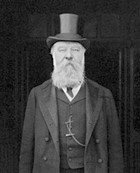 ‘No sadder duty can be imposed upon anyone who has been actively associated with the work of the Bacon Society than the an obituary notice of that generous spirit, who for many years past has occupied the position of their President. Sir Edwin Durning-Lawrence was the last surviving son of the late Mr. William Lawrence, a native of Cornwall, who came to seek his fortune in London in the early part of the last century. . .
He had the advantage of a college education, and took his B.A. and LL.B, with honours at the University of London. In 1867 he was admitted as a barrister of the Inner Temple, but the ample fortune which he had inherited enabled him to follow his inclination for a political career. . . Sir Edwin was created a baronet in 1898, when by Royal license he assumed the additional name of Durning, the maiden surname of Lady Durning, Lawrence's mother. His public services were manifold. He sat on the bench as a magistrate for Berkshire. For a short time he served on the Metropolitan Board of Works. He took a warm interest in University College School, where he was educated ; also in the management of the Royal Waterloo Hospital, and many other public institutions. . .
Sir Edwin was a man of exceptional versatility, and was the fortunate possessor of a phenomenal memory. He had, in a measure, taken all knowledge to be his province. It was difficult to name a subject with the history and particulars of which he was not familiar. This gave a great interest to his conversation. He would frequently astonish his hearers by recounting the circumstances of some out-of-the-way scientific investigation or historical incident with a wealth of detail which was remarkable. . .
Few men were more fearless in the expression of their opinions than was he. Having formed an opinion, he urged it with a vigour which was sometimes resented. Half-heartedness he abhorred. . . He once overheard a schoolmaster refer to the difficulty some parents had in paying the school fees, and to some children who ought to be at his particular school, but could not be entered because their parents were too poor. Sir Edwin handed the master a check for £40, saying, “Use that as you like, and when you want more come to me.” No man ever realised to a greater extent the blessedness of giving.
But there was one subject which in his later years overshadowed all others. More than twenty years ago he was led to an investigation of the controversy which was raging as to the authorship of the Shakespeare poems and plays. His clearness of perception soon placed him amongst those who were attacking the claims put forth on behalf of the Stratford Shakspere. He recognised the importance of the controversy, and the obligation which fell upon all fair-minded men to help forward the establishment of the truth. . .
As his investigation proceeded he realised that only by the aid of the original editions of the works to be consulted could satisfactory progress be made. This led to the purchase of these books, and gradually his love for them increased. The idea of a complete collection of the literature of the Elizabethan and Jacobean period resulted. And so came about the formation of the library at 13, Carlton House Terrace, which may be truthfully described as unique. Sir Edwin was one of the founders, and a member of the first Committee of the Lambeth Free Libraries, an office which he retained until his death.
The head librarian, Mr. Frank J. Burgoyne, had an exceptional acquaintance with the printed books of all periods, and Sir Edwin inspired him with special interest in this literature and obtained his assistance in the purchasing of books. Whenever a duplicate could be obtained of a volume secured for his collection, Sir Edwin gave orders for it to be purchased and presented it to the Lambeth Reference Library. These gifts were on such a scale that a collection has there been formed of Baconian books which is probably more extensive than is to be found in any other public library. The collecting of these books has been conducted with consummate judgment.- The library includes a copy of the First Folio of the Shakespeare plays, 1623, and those of 1632, 1664, and 1685, of the second edition, 1598, of Bacon's Essays, a splendid copy of Bacon's translation of the psalms, containing an autograph appreciation of Bacon in Latin verse by George Herbert, and other excessively rare volumes too numerous to be enumerated. The collection is priceless in value. It can never be dispersed. Its eventual destination is not settled. The books will eventually be placed in a public library. . .
In 1910 “Bacon is Shakespeare” (profusely illustrated) was published. In this Sir Edwin gathered together the arguments and evidence which he considered irrefutably established the Baconian authorship of the Shakespeare poems and plays. He presented a copy of the work to every public library in the world. The total circulation exceeds 30,000 copies.
This was followed by an illustrated pamphlet of 24 pages, entitled “The Shakespeare Myth.” In it the main arguments contained in “Bacon is Shakespeare” are reproduced. Upwards of a million copies of this pamphlet have been printed and issued. But this does not represent the whole of its circulation. It was translated and published in German, and Sir Edwin placed at the disposal of American newspapers the right of re-publication, and supplied blocks for the purpose, so that the total circulation of the subject matter far exceeds that number. A propagandist effort on such a scale had never before been made. The attention of the public has been directed to the controversy by Sir Edwin's efforts to an extent which has resulted in his obtaining thousands of converts. . .
There was a time when it was difficult for a Baconian to obtain a hearing in the public press. The late President of the Bacon Society altered this state of affairs. He wrote letter after letter to the papers, and replied to the comments they provoked. During the last two years it is no exaggeration to say that several hundred letters from his pen have been published in the newspapers of this country, and elsewhere.
A note appeared in the last issue of Baconiana reporting the series of lectures which Sir Edwin had delivered during the winter months of 1913—1914. He was an entertaining lecturer. He availed himself of a large number of lantern-slides to make plain his points and enforce his arguments. Less than a week before his death he was delivering his lecture on “Bacon is Shakespeare” to a large audience at Kentish Town. He was concluding with a brilliant rhapsody—
"Bacon! thou world's wonder!
Deare Sonne of Memorie, great Heire of Fame,
What needst Thou such dull witnesse of thy Name.”
At this stage he fainted and fell backwards. Restoratives were administered; and he recovered. On the following Saturday he was well enough to take a walk on Hampstead Heath. He returned home, and shortly retired to bed, from which he never rose, but peacefully passed away in the early hours of the following Tuesday, the 21st day of April, in his 78th year. . .To the last his ardent interest in what may be termed his life's work was maintained. . .
The world is the poorer by the loss of Sir Edwin Durning-Lawrence. Public charities lose one of their most generous supporters. It has been said of him, that he never made an enemy and never lost a friend. The Baconian cause will suffer from the absence of one of its most convinced, energetic, and stalwart adherents, who has for years past, in season and out of season, propagated the truths as to the immortal fame of Francis Bacon. There is none upon whom his mantle can fall. It behoves those of his comrades who are left to brace themselves to continue the conflict with that fearlessness, that disregard of ridicule, scorn, or censure, which were the characteristics of their late President. They may always be encouraged by the certain knowledge that they hold the truth on this great literary problem, and that in the end truth must prevail.’
Baconiana, No. 47, July 1914 pp. 179-184
GUNDRY, WILFRED G.C., (Died 1965)
It is with great regret that we record the death in December at his Somerset home, of our member and valued contributor, W. G, C. Gundry of the Inner (Middle) Temple. Of the books and pamphlets which Mr. Gundry wrote and edited in support of our cause perhaps the most noteworthy is the Manes Verulamiani of 1626, printed in full photo-facsimile in its original Latin with English translations and notes. This exceedingly rare book is one of the strongest pieces of evidence for the Baconian cause. As such it must have appealed to Wilfred Gundry's legal mind. This facsimile edition, limited to 400 copies of which only a few remain, is unlikely to be reprinted, and no Baconian library should be without one. It is strange that Bacon's principal biographer, James Spedding, should have neglected it.
Mr. Gundry was also the author of Francis Bacon: A Guide to his Homes and Haunts, a most useful reference booklet, with many illustrations, which is still available. Mr. Gundry had been a member of our Society for more than half-a-century and had served on the Council for many years. He resigned only when no longer able to attend meetings in London, and when arthritis had confined him to his home at Hinton St. George.
Notes on Hinton St. George is another interesting pamphlet which he has left us, but of his home life and of his legal work it is not for us to speak but rather for those who shared them. One of his most characteristic contributions to Baconiana was an article entitled "Some Vanity of Mine Art," in which he demonstrated Francis Bacon's addiction to Masques and Devices. In this he successfully refutes the erroneous statement of the late Sir Henry Irving that Bacon had no experience of the stage. M.P. N. F. (Martin Pares and Noel Fermor)
At Christmastide a very welcome and unexpected card arrived at my London address. It was from Wilfred Gundry.
The card showed the address of the Royal Aero Club (as well as Hinton St. George where he lived) and reminded me of the occasion, some years ago, when I was invited there.
The memory is vivid. The gentle old-world courtesy of my host, the noble head, the be-ribboned reading-glass, the stately presence—symbols of an educated English gentleman of a more leisurely age—remain in my mind's eye. Yet the choice of venue was most appropriate, for I learned that this man, known to me as a staunch Baconian and a formidable scholar, had also been a pioneer of aviation, and an associate of the early Channel flyers.
Modesty is a happy attribute combined with accomplishments of such a nature, and I recall a typical remark, made after a meeting at which Wilfred Gundry had received a warm greeting from each Council Member: “Fermor, do you think they really meant it?” The answer was simple enough. N.F. (Noel Fermor)
Baconiana, No. 166, June 1966, pp. 16-17
JOHNSON, EDWARD DINWOODY (c.1881-22nd December 1968)
Known as E.D.J. Born c.1881 in Handsworth, Birmingham, Birmingham lawyer and prolific writer of many works including The Mystery of the First Folio, Francis Bacon versus Lord Macaulay, Bacon-Shakespeare Coincidences, The First Folio of Shakespeare, The Shaksper Illusion. Past Honorary President of The Francis Society.
‘Of the distinguished members whom our Society has lost in recent years perhaps one of the best known to the outside world was Edward D. Johnson, As a practising solicitor living in Warwickshire, E.D. J. was often aroused to indignation at what he called Stratfordian impostures. A prominent and formidable controversialist in the 1930s, not always in agreement with the Council of the day, he continued his support for our cause with undiminished vigour right up to the early 1960s, when at last increasing physical burdens began to take their toll. Uncompromising and fearless in debate—even with fellow-Baconians on occasion —he offered once a £1000 reward, through the Press, to anyone who could prove the authenticity of the Stratford " Birthplace As a lawyer in Birmingham E.D.J. was well aware of the weakness of the Stratford legend, and the strength of his own legal position. Of course the challenge was not accepted, by the Birthplace Trustees or any other interested party; and this was a great disappointment to him, though perhaps sound tactics on the part of the orthodox. However a constant stream of literature, invariably printed at his own expense, gradually won him a larger audience. It was therefore most gratifying to us all when the Mitre Press recently reprinted his The Shakspere Illusion, advertising it in the Times Literary Supplement and elsewhere. . . . So we bid adieu to a great Baconian, at the same time extending to his widow our sincere sympathy at her bereavement. N.F. (Noel Fermor)
It was with a real sense of loss that we received news of the death on December 22nd, 1968, of Edwood Dinwoody Johnson. E.D.J as he became known to us, was a lawyer by profession, a member of our Society for more than half a century, a past Hon. President, and a most redoubtable Baconian. It was through the late Alfred Dodd that the writer first came to know him, and to appreciate his confident and sanguine approach to our controversy. This, he believes, was illustrated best when he accused the Birthplace Trustees of obtaining money under false pretences, and receiving no reply, wrote an open letter in the Birmingham Post inviting them to sue him. This forthright and uncompromising attitude was a great source of encouragement to our members. The same attitude, some twenty years later, proved to be equally inspiring to The Shakespeare Action Committee, at the time of the Centenary celebrations. . .Some words of Delia Bacon, once quoted by the writer, appealed to E.D.J. strongly, and may perhaps serve as a valediction.
. . . The demonstrated fact must stand. The true mind must receive it. Because our learning is not equal to reconciling it with that which we believe we knew already, we must not on that account reject it. That is to hurt ourselves. That is to destroy the principle of integrity at its source. . .
It was in this spirit that E.D.J. espoused the cause of Francis Bacon. M.P’ (Commander Martin Pares)
Baconiana No. 169, 1969, pp. 58-60
LEARY, THOMAS PENNELL "PENN"(May 5. 1921 - March 9, 2005)
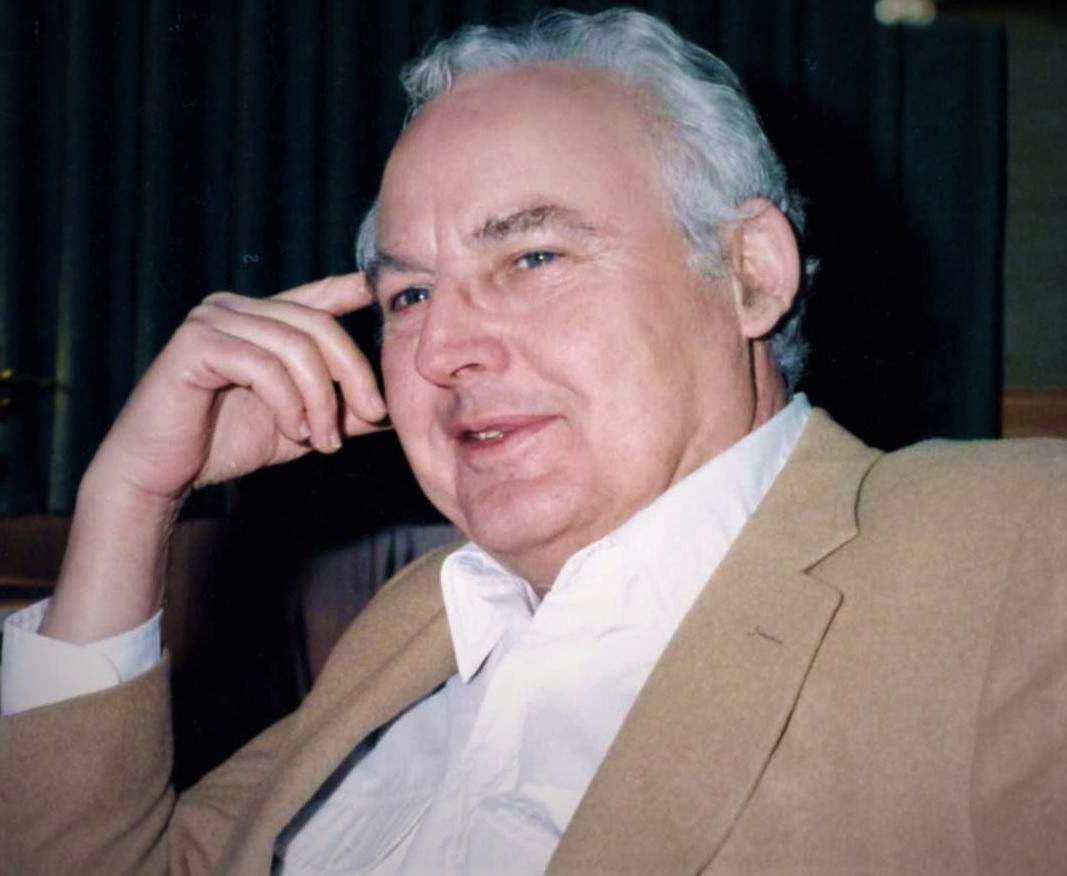 Thomas Pennell "Penn" Leary worked as a lawyer in his native city of Omaha, Nebraska from 1947 until the late 1990s. During WWII, he was a bomber and fighter test pilot at Wright Field in Dayton, Ohio, before being assigned to the Office of Strategic Services, a precursor to the CIA. He wrote in the fields of law, electronics, weather, and aeronautics, and held several patents. His hobbies included photography, printing, machine shop work, electronics, Elizabethan history, computer programming, and cryptography. He was a proud Baconian, and a member of The Francis Bacon Society since the early 1960's. He published numerous articles in Baconiana including: God's Servant, A Few Apt Quotations (December 1985), The.Cryptographic.Shakespeare (December 1989), and Cryptology in the 15th and 16th Century (1997).
Leary published four books during his lifetime: The Oak Island Enigma, The Cryptographic Shakespeare, The Second Cryptographic Shakespeare, and Test Flying at Old Wright Field. In 2021, The Complete Cryptographic Shakespeare was edited and released by his son, Brian Leary
MELSOME, WILLIAM STANLEY (19th November 1865-11th September 1944)
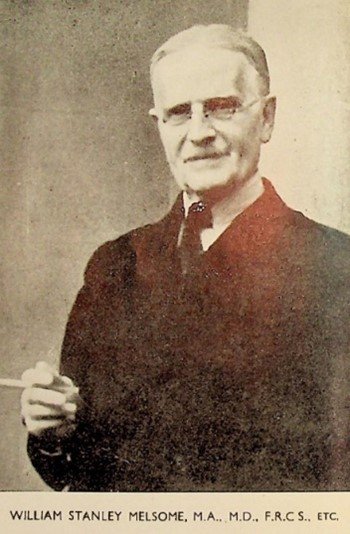 ‘It is with profound regret that we have to record the death on September 11th of our President, Dr. W. S. Melsome, of Bath.
He was born at Stockton, Wiltshire, on November 19th, 1865, and was one of a large family. Educated at Lancing College, he proceeded to Queens’ College, Cambridge, as a foundation scholar. He took his B.A. in. 1886 (Ist Class Natural Science Tripos, parts I and II). In 1888, he was elected Fellow of his College. He took the degrees M.B. and B.Ch. in 1893; M.A., 1894, and F.R.C.S. in 1896, becoming Director of Medical Studies and Natural Science at his College.
Dr. Melsome joined the staff of St. Thomas’s Hospital, and other Hospitals where he practised were Brompton Chest Hospital, Moorfields Ophthalmic Hospital, Great Ormond Street Children’s Hospital and Queen’s Hospital for Nervous Diseases. He was a Gynaecologist at London Hospital. After a period as House Surgeon at the Royal United Hospital, Bath, he took up private practice which became very extensive and included patients whose names are “familiar as household words.”
He was no less accomplished as a Baconian scholar. His prodigious memory made him independent of references to a Shakespeare concordance, and he was equally familiar with the writings of Francis Bacon. This enabled him to recognise the complete harmony of mind existing between the philosophical poet and the poetical philosopher. In April 1939, he began to contribute to “BACONIANA” a series of unique and outstanding articles under the title “The Bacon-Shakespeare Anatomy.” They contained an astonishing variety of parallelisms in thought and expression between Bacon and Shakespeare which ruled out all suggestion of coincidences. These have been revised and augmented, and will shortly be published in a book.
He became Editor of “BACONIANA” in 1940, and President of The Bacon Society in 1942.
When he joined the Society the membership was small, and the financial position fraught with difficulties. He provided large funds for propaganda and the publication of books and other literature. Dr. Melsome was as generous as he was gifted, and no higher valuation than this, of his services to our cause, is needed. He was supreme in both. R. L. E. (Roderick L. Eagle)
Baconiana, No. 113, Oct 1944, Editorial
COMMANDER PARES, GEORGE MARTIN (13th January 1903-24th March 1982)
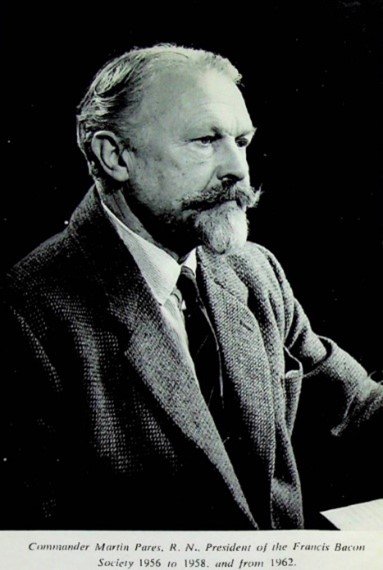 Pares was a Commander in the Royal Navy and Chairman and President of The Francis Bacon Society. Contributor to Baconiana and writer of Mortuary Marbles, Delia Bacon A Pioneer, Knights of the Helmet, The Temple and the Mysteries, Will O' The Wisp, Bacon and the Utopias, The Power and Magic of Words, Hidden Music, Francis Bacon and Faith.
‘Though, necessarily, we have had no personal experience of earlier prominent Baconians, George Martin Pares, who died on 24th March 1982, in his 80th year, must surely rank among the greatest.
A man of action and a fine scholar, Martin Pares was truly one of a rare breed, and withal was a polished writer who took infinite pains to ensure accuracy in his work. His literary output was indeed extensive, and conspicuous for its tolerance and fairmindedness, even in the face of provocation from less well informed and less scrupulous protagonists.
Undoubtedly the motive behind Martin’s unflagging efforts to win recognition for an unpopular cause such as the Shakespeare authorship controversy, stemmed from a life-long determination to establish Truth, eliminate sham, and vindicate Bacon’s reputation. . .
Through his father, who was a brother officer in the Blues with the late Marquess of Northampton, Commander Pares was able to re-establish the Society headquarters at Canonbury Tower, and the present Lord Northampton has very kindly and generously allowed us to maintain a sub-tenancy in a building which is not only on his estate , but was rented by Bacon for a number of years. Thus the Muses spin their threads through the miasma of Time.
During the last War Commander Pares served in the Royal Navy, after a spell in the Fleet Air Arm. . .Commander Pares was seriously wounded on an aircraft carrier in a Malta convoy. The resulting physical handicaps, which remained for the rest of his life, decided him to study poetry and, in particular, Shakespeare. A growing realisation that Francis Bacon alone could have commanded the universal genius contained in the Plays led him to join the Society, only to find in 1951 that the then Council had finally decided that with finances so limited, the solution was to seek a final burst of publicity, and then wind things up.
The decision did not suit a fighter such as Martin Pares, and despite the fact that he was a busy man as Secretary of the Royal Agricultural Benevolent Institution, he took immediate action to organise replacement of the then Council Members.
At that time his chief supporter was the late Captain Ben Alexander, but an heartfelt appeal to the writer and the late Alan Searl (a close friend indeed) did not go unanswered - a fact that the Chairman, as he became, never forgot. After a lively Meeting, the new Council was voted in, and a new era had begun, which was to last for 30 years.
Commander Pares continued as a redoubtable and distinguished Chairman until 1954. After another tenure as Chairman in 1960/1, preceded by a period as President from 1956-8, his devoted and inspiring leadership was recognised by his re-election, nemine contradicente, as President in 1962. Now we have lost our President, an accomplished lecturer, and his place will be difficult to fill. Nevertheless we know that his dearest wish was for a continuance of the Society's mission, and not least Baconiana as the medium for the relaying of our message and research to our Members and the outside world.
The numerous contributions appearing under the name Martin Pares, or simply M.P., are so well known to our readers that it would be superfluous to comment on them, but we append a list of his publications in book or brochure form, some printed at his own expense, as a memorial to a literary output the study of which would inform and delight seekers after the truth. We cannot finish this tribute, however, without reminding Members that the author always stressed that the first Object of the Society was to study the philosophy of Francis Bacon, and the second Object, the authorship controversy. This is as it should be, and should never be forgotten - if only to honour perhaps the greatest of all Englishmen, and his fidus Achates, George Martin Pares.
*****
I am sure Members will be interested to learn how the young Martin Pares became interested in Francis Bacon.
During the 1914-18 war all food was escorted by antisubmarine ships, and those bound for Liverpool were met by various residents who offered the hospitality of their houses to the officers and crews until the cargoes were unloaded, and provision made for the return trip.
Martin Pares was met by Alfred Dodd and on entering his home found himself in a completely new world - Martin’s father was a very great Shakespearian scholar and both he and his son could quote accurately from nearly all the Shakespeare Plays.
In spite of their scholarship, however, they had never queried the authorship, accepting the current idea of the butcher boy’s ability to write in the beautiful language in which the Plays are written.
It seems also that Martin’s only knowledge of Francis Bacon then was that he was imprisoned in The Tower for taking bribes.
The truth, therefore, as presented by Dodd through his studies, and the all-enfolding presence of Francis himself in that house, must have come as a great shock to young Martin Pares. It aroused such a great interest in the life and work of Francis Bacon, that he seized every opportunity to study and eventually was able to resuscitate the Francis Bacon Society, so arousing new interest among the general public, and proving the real authorship of the Shakespeare Plays. D. Brameld.
- MacDuff writes:-
I have a deep feeling of sadness about the death of Martin. He was the first person of any authority in the Francis Bacon Society whom I met. We were much of an age (I think he was a few years younger than I) and we both had a hand in the deep waters as well as in the Society, and the works of Francis Bacon.
He it was who inspired me to buy First Editions of Bacon’s books and I know that, like myself, he felt amazement that few if any Members were sufficiently devoted to the cause of Francis, to risk what was then not a great deal of money on these. Certainly in our case doing this gave me a new lease of life, and Martin stood firmly by me with his advice. It is indeed a sad day for the Society now that he has gone.
*****
I leave it to better pens than mine to tell the bright account of the distinguished achievements of Commander Pares as a sailor, scholar, Baconian, poet, and mystic. I simply wish to express my heartfelt gratitude for the courtesy, the kindness, the friendship he unfailingly extended to me over the years, whether or not I was altogether worthy of the honour.
It is both a sad and a sweet duty to bow to the memory of one’s betters, not in the wordly sense of the word but in its most noble import.
If it is true that in a flash of consciousness illuminating our last breath we re-live all the past experiences of our span of life, Martin Pares must not have been displeased with the balance of his account. He deserved to pass peacefully into the better world in which he believed, and to which his faith must have opened the gates wide. Mors initium vitae was a favourite motto of the great predecessor whom Martin Pares served with such devotion.
Like many Members I was glad to study in his wake, memory will live in the hearts of his friends. Pierre Henrion
Baconiana, No. 182 November, 1982, Editorial, pp. 3-8
POTT, CONSTANCE, MARY (1833-1915)
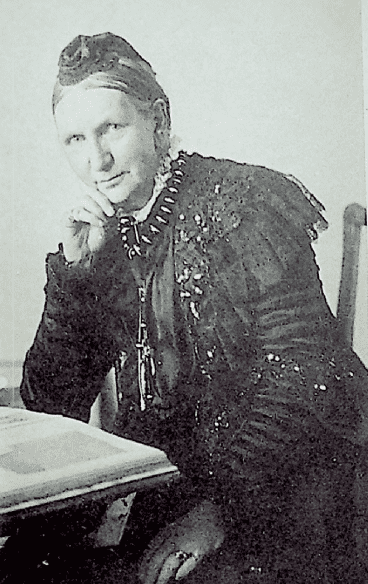 ‘When from the dark and silent corridors of time Incomparable Verulam "paces forth," the world shall look with purged vision on the life and labours of one passed from our little here on to her larger There.
Perhaps we have all stood a little near our leader, teacher, friend, Mrs. Henry Pott, to rightly focus our view.
Privileged as we lovers of Francis Bacon have been to sun ourselves in the radius of her benignant, gracious personality and be fed, we babes in knowledge, from the well-spring of her wisdom (poured out with the selfless generosity of her Master Francis himself), we have scarcely till now realised the enormous debt we owe her.
Her loss brings home to us as nothing else could do the fact that we Baconians of to-day are the product of her brilliant intellectuality, and of her sensitive, intuitive, and energising spirit. First and foremost, then, our late Leader Mrs. Henry Pott is nothing less than the Maier Mapia of the Bacon Society, and is to be venerated as its Foundress, though its immediate initiator was the late Dr. Zerffi. It was he who talking it over with her in 1883, together with a select committee of her personal friends, sent out in August, 1884, the preliminary circulars regarding the aims of the Society, which after the first Conversazione, held July 17, 1884, was soon on foot, with Mr. F. Fearon, Mrs. H. Pott's brother, as Hon. Sec., and her husband as Treasurer.
The Hon. Ignatius Donelly spoke at a meeting held at the Westminster Town Hall, on his Cypher in 1888, and on April 11th, 1893, the Editing Committee of Baconiana met for the first time at 81, Cornwall Gardens. Those who possess the precious early volumes of our organ may trace in many articles of varied subjects the versatile and learned pen of Mrs. Henry Pott. . .
It were hard to find a more faithful disciple of her Master Francis than our elect lady, from dawn to sunset dauntless. The following lines express her fearlessness and courage as the first to do his.
“I will strive with things impossible and get the better of them.”
“I will find out Truth though it were hid indeed in the centre.”
“I am a woman, when I think I must speak.”
As a child in the schoolroom, if not in the nursery, Constance Fearon brought up in the laboratory to reverence both God's Books, Nature, and Bible, by a learned, loving, lawyer father, saw a volume of Bacon on the table of a friend. The child, ripe for knowledge, opened it at the words : “What is Truth? said jesting Pilate and would not stay for an answer.” The impression lasted a life-time. It was her un-Pilate like staying, contemplative attitude towards it that made her in after life so valuable a pioneer in the Mine of Truth. In the child’s extraordinary sympathy with the mind of Bacon, we trace the “true beginning of her end.” One of the big works for which we owe her untold gratitude is the publication with Longman, in 1883, of the Promus, a MS. Note-Book of Francis Bacon, discovered by her at the British Museum, and edited by her with a world of valuable notes, and a Fore-word by Dr. Abbot. . .
Unlike the usual sequence of literary studies, with Mrs. Henry Pott, Bacon came first, Shake-Speare second. It was not till Constance's “own ideal knight who reverenced his conscience as his king, and loved one only and who clave to her,” had wooed and won her, and she was the wife of that “very parfit gentil knight,” Mr. Henry Pott, of Wallington, Surrey, that she first learnt to know her Shake-Speare. As soon as she became the ardent student we knew her of the Plays and Sonnets, she awoke to the astounding fact that they echoed the philosophy, the heart, the very words, and more, the “Soul of words, the Notions,” as the Novum Organum calls them, of Francis Bacon. From this seed sprang the conviction matured as years went on that there was but One Master Mind dominating the fifteenth and sixteenth centuries. And to proving this her wide brow and facile pen were consecrated. When and how she found leisure for teaching and inspiring our Society as she did, for world-wide correspondence of the fullest kind, for all her deep and well-thought-out literary productions (the manual labour of which she kept in her own hands,) is incomprehensible. Particularly when we consider her domestic life as mother of nine children, and her busy social and family circle. . .
The cryptic, esoteric side of our question has been also dealt with in her wonderful book, Francis Bacon and His Secret Society, lately re-edited with additions, and containing a most comprehensive view of his life and aims from the Rosicrucian side. . .
Space forbids more details of a life and mind whose freshness and fragrance continued to its earthly close, and which so fully realised the beautiful thought of her Master Francis:
“Above all believe it, the sweetest Canticle is Nunc Dimittis when a man hath obtained worthy ends and expectations.”
“The rest let sorrow say” . . . . . . . A DISCIPLE
Baconiana, No. 52, Oct 1915, pp. 244-248
SEYMOUR, HENRY (1840 - 3rd February 1938)
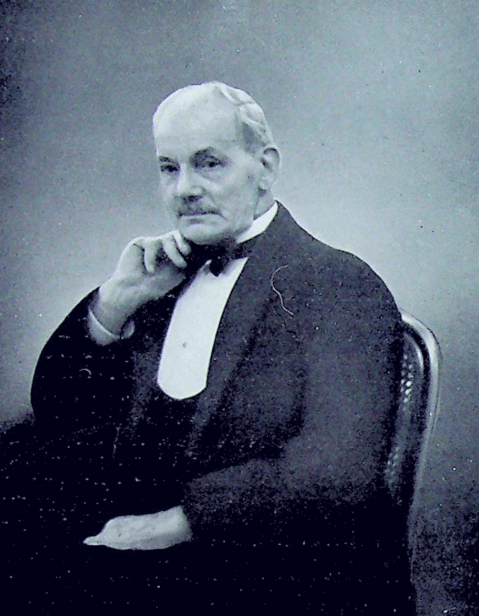 ‘It is with deep regret that we have to record the passing of our Hon. Secretary, Mr. Henry Seymour, on the 3rd February 1938 at the age of seventy-eight. The funeral took place on the 8th February at Finchley Cemetery and this was attended by members of the Council of the Bacon Society, who on behalf of all its members sent a wreath in token of his long and faithful service to them.
Mr. Seymour was a man of vigorous intellect, wide sympathies and varied activities. In his earlier days his energy found expression in social reform movements and in these he was associated with Charles Bradlaugh, Bernard Shaw and the original members of the Fabian Society, gaining wide experience in journalism, political life and commerce.
In business he was one of the pioneers of the gramophone industry, acting as the editor of the two principal Trade Journals The Talking Machine and Sound Wave. He was the author of a complete record of the Industry entitled “The Reproduction of Sound’’ which is acknowledged as the standard work on the subject.
Aviation was another of his interests: some fifty years ago he wrote “The Conquest of the Air” a book which attracted considerable attention at a time when people were very much less air-minded than they are to-day.
But it is of course as a member of the Bacon Society for more than twenty years that Mr. Seymour’s work was most familiar to readers of Baconiana. As has been said he acted as the Society’s Hon. Secretary and was the Chief Editor of this journal. He contributed regularly to it under his own name articles relating to practically every aspect of the Society s work. He was responsible too for by far the greater part of the unsigned articles, I Notes and Notices, Reviews, etc. All showed his wide knowledge of his subject and ability to present it to readers in clear and attractive form. A great mass of correspondence from many parts of the world passed through his hands and his readiness to help enquirers, patient research and enlightening criticism will not be readily forgotten by members of the Society.
He was a master of the difficult and recondite subject of cryptography in its many branches. He was one of the few who made themselves really familiar with the Biliteral Cipher which Francis Bacon described in his “De Augmentis” 1623 and was one of the most doughty champions of the claims of Dr. O. Owen and Mrs. Gallup to have discovered such a cipher in the other works of Bacon and his “masks.”
It may be said that in some respects Mr. Seymour was more iconoclast than reformer. His heterodox opinions, always fearlessly expressed, sometimes perhaps overstated, inevitably brought him into conflict with others: he hit hard but was as ready to receive as to give blows in the rough and tumble of controversy. He had an intense hatred of sham in whatever guise and was sincerity itself. If ever man meant what he said Mr. Seymour did. His energy and industry were unwearied to the end and his familiar personality will be greatly missed among Baconians, not only in England, but in many parts of the world.’
Baconiana, No. 89, April 1938, pp. 55-56
THEOBALD, ROBERT MASTERS (28th of November 1829-1914)
‘By the death of Dr, R, M. Theobald the Bacon Society loses one of its founders—one of its most enthusiastic and most accomplished members. The Society was formed at a meeting held at 81. Cornwall Gardens, on the 18th of December, 1885. At this meeting, Dr. Theobald read a paper on “Bacon as Viewed by his Biographers.” He was a member of the first Committee elected. Only two of those who were present on that occasion now survive—Mrs. Pott, and her brother, Mr. Francis Fearon. In the following June, the first number of "The Journal of the Bacon Society was published, Dr. Theobald acting as Editor. The Journal was published at intervals until 189 when in the May of that year the title was changed to Baconiana, under which title it still continues as a quarterly magazine.
Robert Masters Theobald was born in Birmingham on the 28th of November, 1829. At that time his father held a position of trust in a paper warehouse, but in 1833 became connected with the Religious Tract Society, and moved to London. . .
His advice was sought and freely given to his brother librarians throughout the country on important questions. Mr. Burgoyne was a convinced Baconian and was a member of the Council of the Society. Miss Shawcross, who passed away after a very short illness in July last, was an old member of the Society, and had acted as private secretary to Sir Edwin and Lady Durning-Lawrence for many years. . .
He commenced studies as a medical student at University College. He there obtained the degree of M.R.C.S. In 1858 he married, and commenced as a general practitioner at Kentish Town. After a year he removed to Cambridge, staying about the same time, then to Kings Lyno)eventually settling at Blackheath. At one time Dr. Theobald acted as physician to St. Saviour's Hospital, Osnaburgh Street, Regent's Park, which was especially devoted to the practice of the Mattei System. His last years were spent at Lee, and it was there, in his 85th year, that he passed away in his sleep. He had been up during the day, and in the afternoon played chess. Retiring to bed about 10 o'clock he fell into a sleep from which he never awoke.
The story of Dr. Theobald's conversion to the Baconian Theory is set out in the first chapter of Shakespeare Studies in Baconian Light. One day he was visiting a friend, and took up Gerald Massey's book on idea that William Shakspere, of Stratford, wrote the plays and poems attributed to him was, to Dr. Theobald, not so much a persuasion as a settled tradition. He asked his friend what his opinion was of Gerald Massey's book. The reply was: " Doubtless the book is good enough in its way, but if you want to get a clear light as to the genesis of Shakespeare's poetry, you should read this" and he put into his hands Nathaniel Holmes' book on “The Authorship of Shakespeare”.
Dr. Theobald thus describes the effect of its perusal upon his mind:
“As soon as the book was in my hand, the persuasion took hold of my mind that this question of the authorship of Shakespeare was one open to debate, and that Holmes’ conclusion was probably right. My conversion was of the most orthodox and instantaneous character, and the belief then adopted has never been disturbed. But although the central truth came suddenly, the reasons and arguments to support could not thus immediately enter into the mind. That moment was the starting-point of a long course of study. I read all I could get hold of by Bacon, and re-read Shakespeare, and kept the two in perpetual juxtaposition for years, until the persuasion, which came by a flash of perception, ripened into a strong and well-grounded conviction resting on facts and arguments solid and secure as mathematical demonstration. . .”
With an industry and devotion which were most praiseworthy the convert applied himself to an investigation of this fascinating problem. He had the advantage of classical attainments, which were by no means meagre. His pen was that of a ready writer. For nearly half-a-century his great gifts were lavishly used in searching for the truth, and propounding what he believed to be truth. The pages of Baconiana and its predecessor contain numbers of articles written by him. They are clear, scholarly, and convincing.
He was a regular contributor to the Press, as an article writer, reviewer, and correspondent. When Mrs. Pott published “Bacon's Promus,” an exceptionally able review of the work from his pen appeared in The Nonconformist. . .
Dr. Theobald kept up correspondence with nearly every Baconian of note at home and abroad, and many eminent Shakespearean scholars. Especially cordial were his relations with the late Professor Dowden, whom he always insisted on describing as at heart a Baconian. . .
He was a man of keen intellect and sound judgment, industrious and painstaking in all he undertook. He was amiable in character, and generous almost to a fault. His memory will always be held in high regard by those who had the privilege of his friendship or of his acquaintance.’
Baconiana, No., 47, July 1914, pp. 185
THEOBALD, BERTRAM GORDON (1871-2nd September 1940)
 Born 1871 St Pancras-– Died 2nd September 1940 A quiet and considerate ‘rebel’ Mr. Bertram G. Theobald, B.A once gave a talk at the Diamond Jubilee International Vegetarian Congress 1907 Manchester, England.
‘Baconiana appears under the shadow of the death of its Joint Editor, Mr. Bertram G. Theobald. Tributes to his long and loyal service to the Bacon Society—he was a nephew of one of its founders, Dr. R. M. Theobald—to his ripe scholarship, his literary ability and his wide knowledge of the history and traditions of Baconiana appear elsewhere. Here is merely recorded the loss of our Society's President and one of its most valued members and friends. . .my friend and colleague, was Joint Editor with me of Baconiana for four years, and his last work was the revision of MS. contributed to this number. Proofs had been sent to him by the printers for correction; these, in which he had taken so much interest, he will never see. The morning after I received the telegram announcing his peaceful passing in sleep a letter came to me from him, written apparently in perfect health and memory and dealing with the future of Baconiana and the possibility of resuming its quarterly publication. He urged me to meet him and this I had determined to arrange. It was, however, decreed otherwise. It is almost impossible to believe that I shall never see him or read his familiar handwriting in another letter again.
His help and collaboration in our work have been invaluable. He was a frequent contributor to Baconiana himself, many of his articles being of great controversial value. As recently as April last he reviewed Mr. Fletcher Pratt's book, Secret and Urgent, the Story of Codes and Ciphers, and this was the last work appearing above the familiar initials B.G.T.
He was an expert cryptographer. His Francis Bacon Concealed and Revealed (London, Cecil Palmer, 1930) and Shakespeare Sonnets Unmasked (London., Cecil Palmer, 1929) never received from press or public the consideration undoubtedly due to them.
He was extraordinarily diligent in research, and had prepared for publication the results of much of this upon the problem of Bacon's death. I was privileged to read his MS. in Cornwall some two or three years ago and was greatly impressed by the clarity and force of his argument.
As a speaker he was unruffled in debate and, although provoked, was never anything but courteous to an opponent; he was a most persuasive advocate in writing and speech, his style in both being characterised by the charm of an attractive personality. It was difficult for him to suffer the restraining hand which his long illness imposed upon his normal activities which were many and varied during recent months, and he felt very keenly his inability to write for Baconiana. Only a short time before he died he wrote me of what seemed to be more satisfactory results of medical treatment and of his hope of at least partial recovery from the effects of that cardiac strain of which he had been warned last autumn to be careful. Others will doubtless write of his long service to the Bacon Society and to the causes it has made its own. No one could possibly have rejoiced more than he would have done in the attainment of the Society’s objects; he recently wrote me that he thought only some discovery of documents or other proof amounting to demonstration would ever break down the prejudice against what were for him the unanswerable claims of Francis Bacon to be the real Shakespeare and indeed to be much more besides. It is, however, as the kindliest and most genial of people that I shall longest remember my late colleague; my world is the poorer for the loss of a man and of another friend. Francis E. C. Habgood.
It was with great grief that I learned of the passing of Bertram Theobald: I had been in close contact with him for several years and I found him a most charming colleague. He will be a great loss to the Bacon Society, for he not only had great ability as an author but had made exhaustive study of all aspects of the Bacon-Shakespeare problem. Although he was a convinced believer in the Cypher theory, he never let his own opinions on that subject and others of a controversial nature prejudice him against those who held contrary views. This was a great asset to the Society, as he held the balance evenly on a much debated question and one which had led to dissension in the past.
Upholding his own views with great ability, he was always ready to give a fair hearing to those who thought differently. He had an even temperament which stood him in good stead as President, and no one could ever accuse him of attempting to dictate the Society's attitude to matters of controversy between its members. Personally, my relations with him as a former Chairman of the Council and present Secretary were always of a most cordial nature, and I feel I have lost a great friend, ever ready to assist me and willing to undertake any task in the Society's interests. I shall miss him, and so, I am sure, will all who were fortunate enough to know him.
He was a very good lecturer. Time after time he undertook to give an address when no one else was available, and that in all parts of the country and at his own expense. His ‘Shakespeare the Mask—Bacon the Man’ lecture was most effective, as it conveyed the known facts in a lucid manner which interested even the most orthodox of his audience. His forte was in answering questions. He was really brilliant in his replies to these, and anyone hearing them felt that he had a thorough grasp of his subject. His platform manner was always urbane, in no way aggressive, and his points were made the more effectively for that reason. He never lost his temper, even with the most provoking objector, and thus gained for himself the sympathy of his audiences, whether they agreed with him or not.
His business ability was of a high order. Letters to him were always attended to and everyone answered, generally by return of post. His correspondence was world wide, and many a new member joined the Society as a result. I think perhaps his illness was brought on owing to the work he did on behalf of the Bacon Society. It was always a joy to meet and converse with him, and as a very humble Baconian I am glad to offer this very inadequate tribute to a man most unselfish in all his ways of life, and to a good friend and loyal colleague.
I shall not look upon his like again. May he rest in peace. Valentine Smith.
Baconiana, No. 97. October, 1940. pp.53, 62-64
THE WOODWARDS
The Woodwards were a Baconian dynasty all dedicated to the Baconian cause.
WOODWARD, FRANK
Brother of Parker Woodward, co-writer of Secret Shakespearean Seals from 1916 and writer of Francis Bacon’s Cipher Signatures in 1923. Frank says in his introduction, ‘During the year 1916, my brother and I published a book “Secret Shakespearean Seals” describing a system of Cipher signatures, which we had found in the First Folio edition of the Shakespeare plays published in 1623, and in some other works of that period. . .My desire is to place before those interested, in as clear a manner as possible, the result of many hours of investigation, which I have given to that fascinating subject, the authorship of the Shakespeare plays. To my brother, a solicitor by profession, it seemed natural to approach this question from the point of view of “evidence.” He studied the works and lives of literary men of Shakespeare’s period, and in his “Tudor Problem” and other works, has published the result of his researches.’
WOODWARD, PARKER (8th June 1854 – 1931)
Brothers Parker and Frank Woodward published Secret Shakespeare Seals in 1916.
‘It is with deep regret that I have to record the death of one of the most earnest and disinterested soldiers in the Bacon movement, and one of the Society's Vice-Presidents, Mr. Parker Woodward. Born on June 8th, 1854, a son of Mr. John George Woodward and Mary Parker, his wife, he exhibited early a genius for analysis, which ultimately found its expression in the study of law. He was educated in London, and took honours at a Final Law Examination in 1875. He was admitted as Solicitor on Jan. 7th, 1876. He was a prominent Free-Mason and became Clerk to the Hucknall Urban District Council. During the war he was Chairman of the Munitions Tribunal for Nottingham, and was Vice-Chairman to the Court of Referees. He was also a manager of the Nottingham Savings Bank. He was author of the Handbook to the Law of Designs Registration; President of the Nottingham Incorporated Law Society; also of the Nottingham Subscription Library. In sport, he was the president of the St. Anne's Bowling Green, Nottingham.
He married Maria Elizabeth, sister of the late Alderman John Renals, of Nottingham, and he died on May 10th, 1931. am.
To readers of his voluminous articles in Baconiana since its inception, and of his other painstaking works around the great Bacon-Shakespeare controversy, no word need be said here in commendation or in gratitude. These writings speak for themselves, not only for the help he thus afforded those of us who knew and loved him, but for those who come after and who will be quickened by the labour and zeal he so lavishly bestowed on the greatest of all literary problems that has ever arisen or is likely to arise in the history of language and letters.
Requiescat in pace. HENRY SEYMOUR’
SYDNEY WOODWARD (Died 1962)
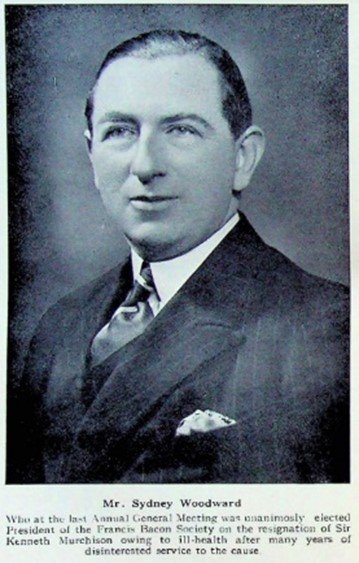 ‘We mourn the passing of our respected member Sydney Woodward, and offer our sincere sympathy to his widow in her sad loss. He came from an illustrious family to whom the Society, and Baconians generally, will ever be grateful for their scholarly writings. His father and uncle, Frank and Parker Woodward, have left behind them an indelible record of great service to our cause.
Sydney Woodward became President of the Society in 1950, upon the death of Sir Kenneth Murchison, having previously served as Hon. Treasurer. When, following the last War, the Society found itself in difficulties, he helped considerably in putting things in order, and the finances on a sound basis.
His retirement to North Devon did not diminish his keen interest in the work of the Society, although he was perforce cast in a less active role; but it is a happy thought that his cousin Wilfred has taken his place on tradition thus being maintained.
A matter which seemed to afford Sydney Woodward much pleasure was the fact that Mrs. Gallup stayed with his family in Nottingham when writing her great work on Francis Bacon's biliteral cipher; and so he was able to testify to Mrs. Gallup's integrity and complete honesty of purpose. T.W. (T. Wright Council member)
Baconiana, No. 162, March 1962 p.11
WILFRED WOODWARD (c. 1866-1979)
The Council greatly regret to announce the death of Wilfred Owen Woodward on 9th November, 1979, aged 93. Wilfred Woodward not only served on the Council for many years but remained a Vice-President until his death. He was a cousin of the late Sydney Woodward, whose father was Frank, brother of the scholarly Parker Woodward, and was himself a devoted adherent to our cause. We shall miss his loyalty and tenacity of purpose in the future.
N. F. (Noel Fermor)
M.P. (Martin Pares) writes:-
Wilfred Woodward was a relative of the late Parker Woodward, who was one of the most prolific writers on the cause for Francis Bacon, as the real author of the Shakespearean drama. Wilfred’s own articles in Baconiana were much appreciated and he became a Vice-President of the Society. He and his wife lived in a comfortable house in Cavendish Crescent, The Park, in central Nottingham.
It was there that I had the honour and pleasure of visiting them for the period of the Royal Show in 1957. I had taken the R.A.B.I caravan to the Show, and it was Mrs. Woodward who helped me to receive farmers, and their wives and friends who were members of the R.A.B.I. It was so hot in the caravan that Mrs. Woodward swooned. Fortunately a trained nurse was at hand, and it was not long before Mrs. Woodward was resting peacefully in a cool tent in the shade. I shall always be grateful for the great hospitality I received from the Woodwards on that occasion.’
Baconiana, No. 180, 1980 pp. 5-6